


Core Thesis
The market spent the week celebrating a deal that does not yet exist.
Iran bought time.
Trump sold optimism.
Investors bought both.
Oil fell.
Volatility collapsed.
Equities rallied.
The bond market remained unconvinced.
Throughout the week, markets increasingly embraced the idea that tensions in the Middle East were moving toward a negotiated resolution. Reports surrounding ceasefire extensions, shipping normalization, and diplomatic progress encouraged investors to price a more stable future.
But the underlying structure remains unresolved.
The difficult issues:
sanctions
uranium enrichment
regional influence
long-term security guarantees
have not disappeared.
They have simply been pushed into future negotiations.
Markets are pricing resolution.
The deal is only buying time.
That gap is where the next macro move will come from.
Executive Summary
This week’s rally was driven by a simple narrative.
Lower oil.
Lower inflation.
Lower yields.
Higher equities.
The logic appears straightforward.
If energy prices stabilize and geopolitical tensions ease, inflation pressures should decline, allowing financial conditions to loosen.
Markets responded accordingly.
Risk assets advanced.
Volatility compressed.
Treasury yields eased modestly.
Yet the bond market continues asking a different question.
What happens after the relief trade?
Because even if oil stabilizes, the structural issues remain:
rising debt burdens
expanding deficits
persistent Treasury issuance
elevated refinancing costs
The market is trading a deal.
The bond market is trading the bill.
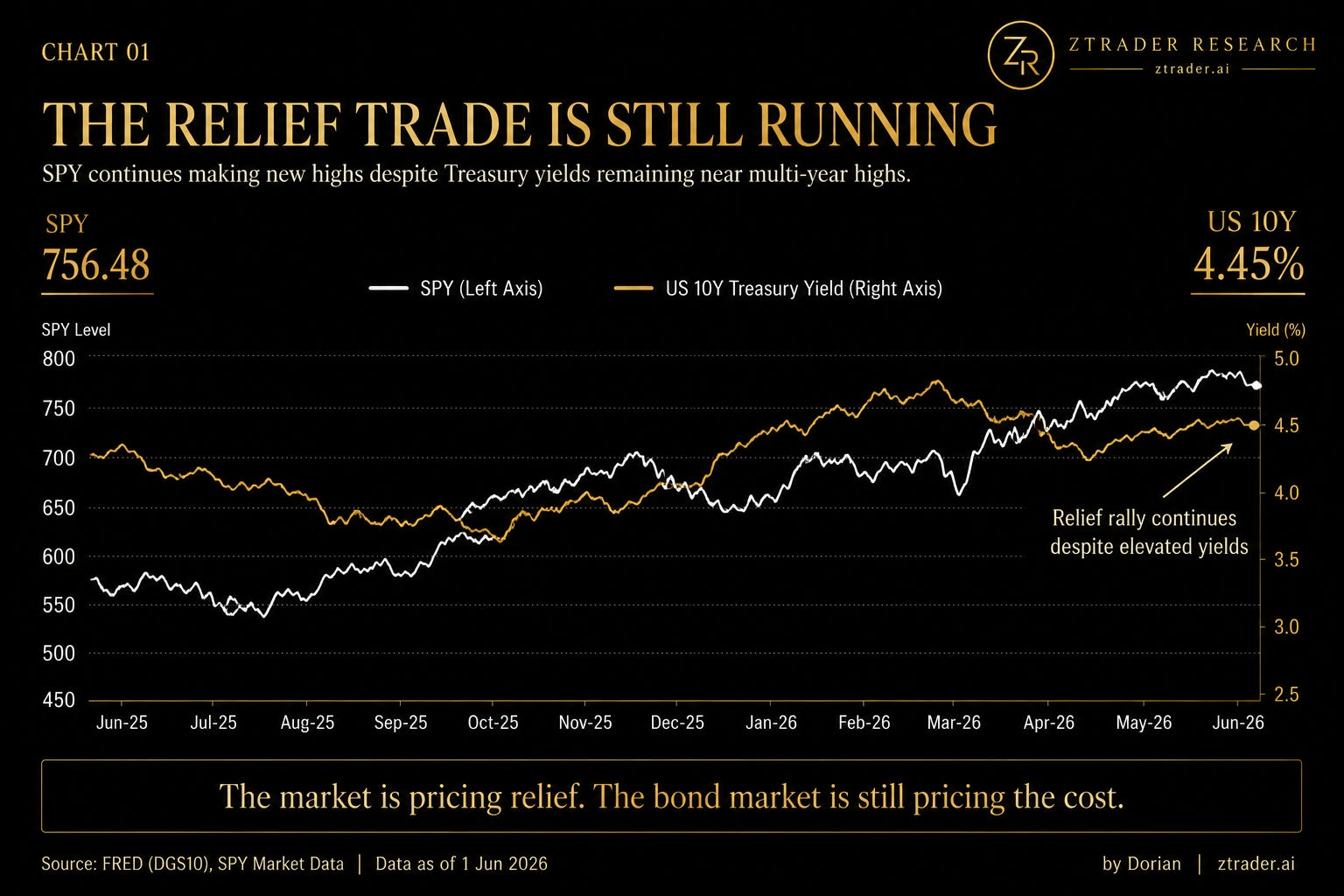
Chart 01 — 10Y Treasury Yield vs SPY
Takeaway
Equities continue pushing higher, but elevated yields remain a structural valuation constraint.
What The Market Is Ignoring
The market currently assumes:
oil continues lower
inflation continues moderating
AI earnings remain strong
economic growth remains resilient
The bond market is less willing to make those assumptions.
That divergence matters.
Because one side is pricing optimism.
The other is pricing financing costs.
