

By Dorian
For more articles, market tools and online courses,
visit : https://ztrader.ai;
My official site:
visit: https://rvnrc.com/
Japan has more jobs than workers, and from 2027 its working-age population starts shrinking faster.
Japanese companies are now going bankrupt in record numbers at 2.4% unemployment, and more than half of them are failing because labor has become too expensive to keep.
For most of the past three years, Japan’s labor shortage has been read as good news. It pushed the spring wage round, known as shunto, above 5% for a third straight year and gave the Bank of Japan the wage evidence it needed to declare on October 30 that underlying inflation has reached its 2% target.
The same shortage now shows up in a darker set of numbers: record labor-related bankruptcies, a record wave of restaurant failures, pay rises at small firms that trail inflation, foreign business owners leaving under tighter visa rules, and a business survey that reports the tightest staffing conditions since the early 1990s.
For traders, this matters because the shortage now sits underneath every major Japan variable at once, from the pace of BOJ hikes to the yen, the JGB curve and the durability of Japan’s AI investment cycle.
This piece traces where the shortage turned from tailwind into constraint, which firms and sectors are absorbing the damage first, why pay still trails prices, why Japan is gaining foreign labor while losing foreign capital, and how all of it feeds into the BOJ’s December 18 decision.
I. WHY COMPANIES ARE GOING BUST AT 2.4% UNEMPLOYMENT
Japan’s headline labor data may look calm, but the truth behind that corporate data is most striking, the real story is hidden beneath this number.
Unemployment fell to 2.4% in September from 2.5% in August, yet both of Japan’s private credit agencies recorded the highest number of labor-shortage bankruptcies for any April–September period since they began counting in 2013.
Tankan: Shortage Near Bubble-Era Extremes
The Tankan is the Bank of Japan’s quarterly survey of Japanese companies, and its employment conditions DI subtracts the share of firms reporting a labor shortage from the share reporting excess staff. The deeper the negative number, the tighter the labor market feels to the people doing the hiring.
September survey (all firms, all industries): The DI fell to -38 from -37 in June, matching the most severe reading in 34 years first recorded in December 2025.
By company size: Large firms reported -29, mid-sized firms -38 and small firms -42, so the shortage deepens as companies get smaller.
December outlook: Firms expect the DI to reach -41 overall and -45 for small firms, which would be the tightest reading since the early 1990s.
Bankruptcy Data: TSR and TDB Agree on the Trend
Tokyo Shoko Research (TSR) and Teikoku Databank (TDB) both track legal bankruptcies with liabilities of at least ¥10 million and classify each case by cause, which is why their counts differ slightly while the trend matches.
TSR: Labor-shortage bankruptcies reached 240 in April–September 2026, up 17.0% from 205 a year earlier and the fifth straight annual increase from a low of 26 in the same period of 2021.
TDB: Its count reached 225, up from 214, setting a record for the fourth consecutive year.
Full fiscal year 2025: TDB counted 441 labor-shortage bankruptcies, roughly 1.3 times the 350 recorded the year before.
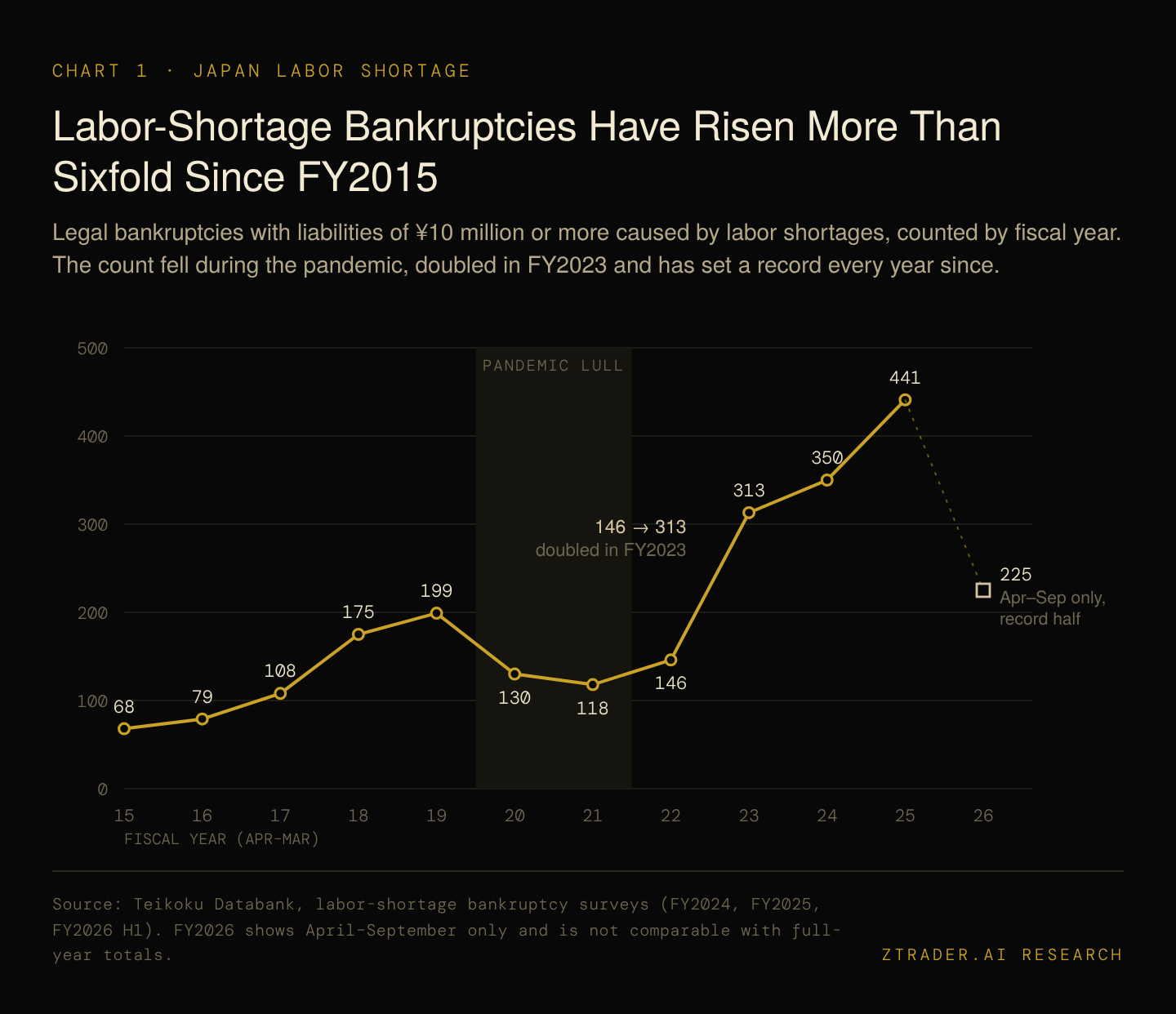
[CHART 1 — Labor-Shortage Bankruptcies by Fiscal Year, FY2015–FY2026 H1 (TDB)]
What happened with that 240 companies bankrupted?
Costs are out of control and companies can no longer bear.
The most important number sits inside TSR’s breakdown, because it shows how the shortage is killing companies. TSR splits labor-shortage bankruptcies into three causes: rising labor costs, employee departures and failure to recruit.
Rising labor costs: 130 cases, up 75.6% from 74, now 54.1% of the total.
Employee departures: 67 cases, up slightly from 65.
Failure to recruit: 43 cases, down 34.8% from 66.
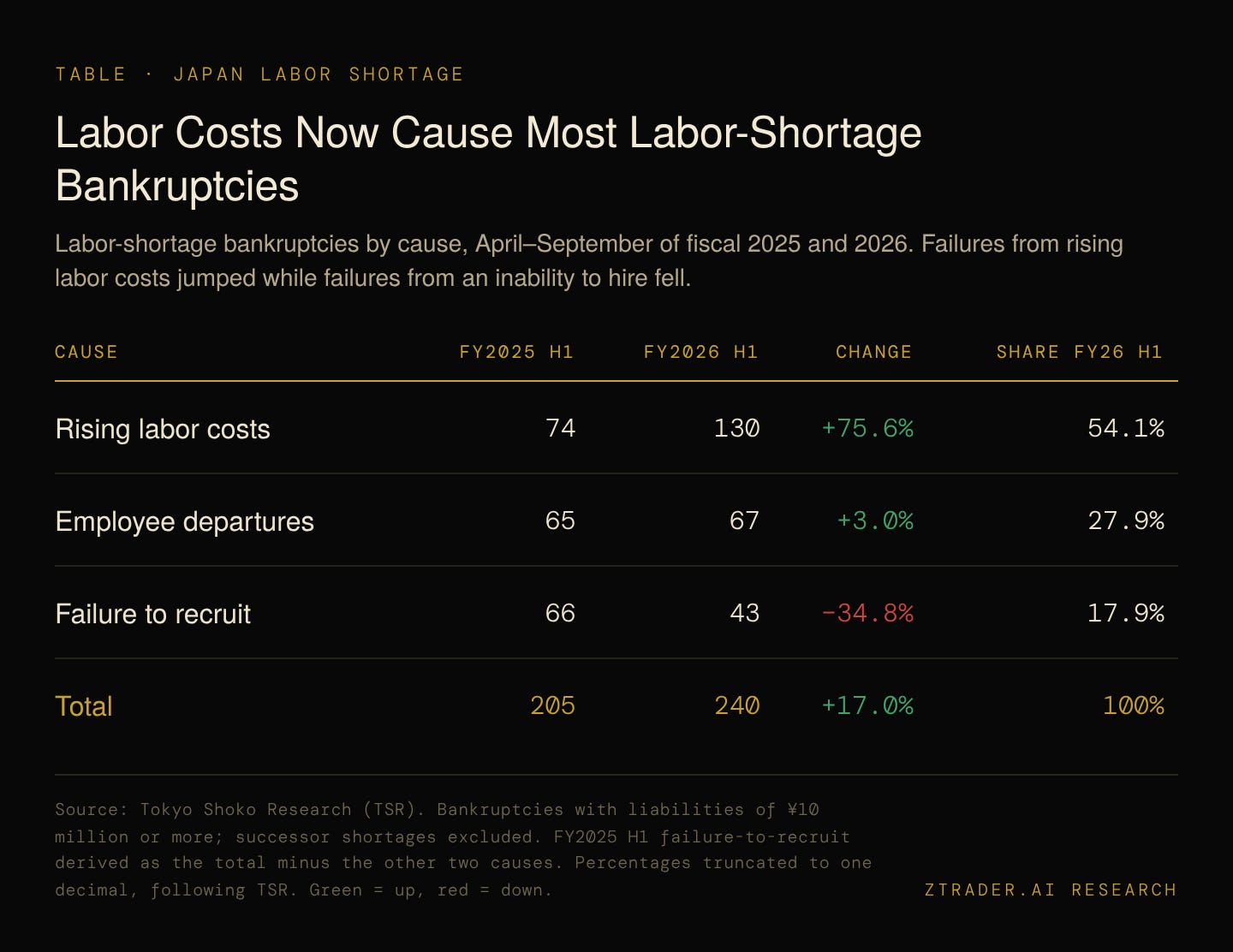
[TABLE — Causes of Labor-Shortage Bankruptcies, FY2025 H1 vs FY2026 H1 (TSR)]
Companies aren't going under anymore just because they can't hire people. What's happening now is they do find workers, pump up pay to keep them, and then bleed themselves dry doing it.
TSR hits the nail on the head with "wage-hike fatigue."
The labor shortage isn't a hiring problem anymore—it's an income statement crisis.
II. THE JOB OPENINGS RATIO IS HIDING THE REAL PROBLEM
You'd think the labor shortage meant the economy was red-hot, but real economic demand is actually shrinking.
There's a massive gulf right now between what the official Japanese economic stats say and the hard, painful truth people are facing in their daily lives."
What the Ratio Counts
The jobs-to-applicants ratio divides active job openings at Hello Work, Japan’s network of public employment offices, by the number of registered job seekers.
At 1.18, there are 118 openings for every 100 applicants.
2026 readings: The ratio fell to 1.17 in May, held at 1.18 through the summer and edged up to 1.19 in September.
One year earlier: It stood at 1.20 in September 2025, which was already the lowest since January 2022.
So the demand-side gauge is lower than a year ago while the Tankan shortage has deepened.
When firms report a worsening shortage at the same time as openings per applicant edge down, the pressure is coming from the supply of workers. Japan is running short because the pool of available people has stopped growing.
Participation Has Done All the Work
Japan’s labor force crossed 70 million for the first time in 2025, reaching 70.04 million, and the way it got there explains why the next decade looks different.
Since 2015, the labor force grew by 3.79 million while the population aged 15–64 fell by about 3.9 million, so every additional worker came from higher participation. More than half of the gain, 2.13 million people, came from workers aged 65 and over.
Women: Japanese women’s labor participation is already on par with the Nordic countries.
Workers aged 65 and over: Their participation rate is the second-highest in the OECD after South Korea’s.
These were the two pools that carried a decade of employment growth, and both are close to full.
The Demographic Step-Down From 2027
With births dropping to 671,236 in 2025, Japan is running out of time before the labor pool takes a direct hit. A study by the Recruit Works Institute projects that the working-age population will plunge starting in 2027.
By 2040, we're looking at a 12% drop in labor supply—leaving a gap of over 11 million workers, even if the economy stands completely still. If there's any real growth, that gap gets even wider.
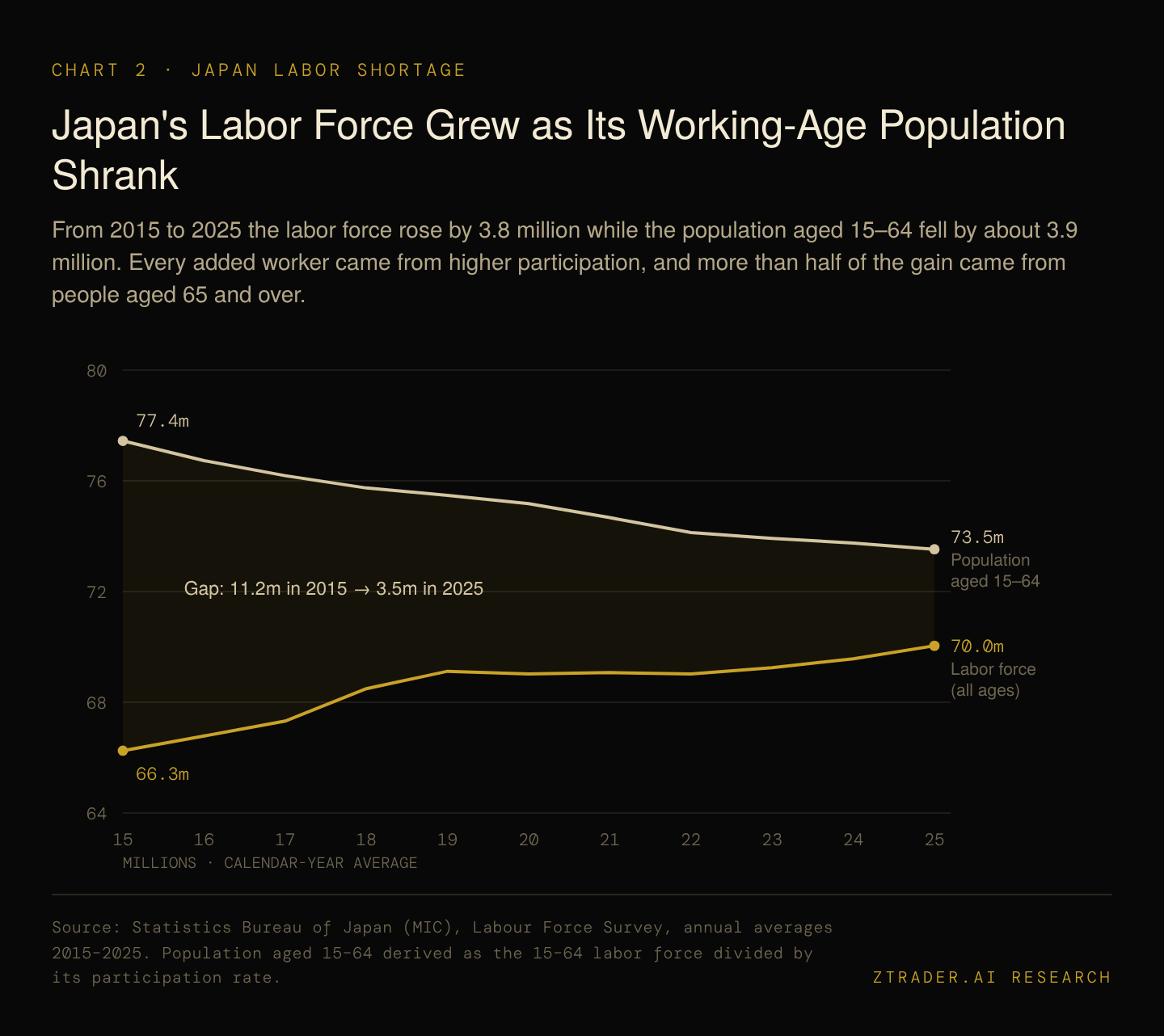
[CHART 2 — Working-Age Population vs Labor Force, 2015–2025]
Japan has used up its easy sources of new workers just as the population curve turns down harder.
III. WHO GETS HIT FIRST: CONSTRUCTION, SERVICES AND SMALL FIRMS
If you want to see where Japan’s labor pain is hitting hardest, look at small businesses and labor-heavy industries—they’re the warning light for what’s coming next.
Construction is hit worst
Construction saw 70 bankruptcies tied to worker shortages between April and September. It’s gotten so bad that local governments can’t even get public projects built. Over 90% of municipalities say they’ve had tenders fail over the past three years because budgets don’t match skyrocketing costs and contractors simply can’t find workers. Construction costs are now 50% higher than they were in 2015.
Software and Services aren’t far behind
Services logged 63 bankruptcies. Together with construction, they make up over 60% of all cases. Even small software shops are folding—jumping from 2 to 8 failures—because they can’t hire the AI engineers needed to stay relevant.
Big companies win, small ones get crushed
The BOJ Tankan survey tells the whole story: -42 for small firms versus -29 for big players. Big corporations have the cash to outbid everyone for workers. Meanwhile, small firms are stuck paying higher material costs and a new minimum wage hike to ¥1,177. They’re literally being priced out of keeping their own staff.
IV. RESTAURANTS ARE CLOSING AT A RECORD PACE
If you want to see the labor shortage in real life, just look at your local neighborhood restaurants.
If you don’t have people to cook the food or serve the tables, you can’t open—and restaurants are shutting down faster than ever.
First-half 2026 set a grim new record
Both TDB and TSR released their latest figures, and both show the worst start to a year on record:
TDB counted 473 restaurant bankruptcies between January and June. That’s four straight years of growth. Pubs and izakayas got hammered the most (125 cases), and almost 80% of these were small spots with debts under ¥50 million.
TSR looked at the broader food scene and hit 509 bankruptcies—the highest since 1997. Failures caused specifically by labor shortages doubled to 36. Over 90% were tiny operations or sole proprietors with less than ¥10 million in capital.
The bad policy could make it worse
To top it off, on April 13, the government suspended new Specified Skilled Worker visas for the food industry. That instantly shut off the main pipeline restaurants were using to hire overseas workers.
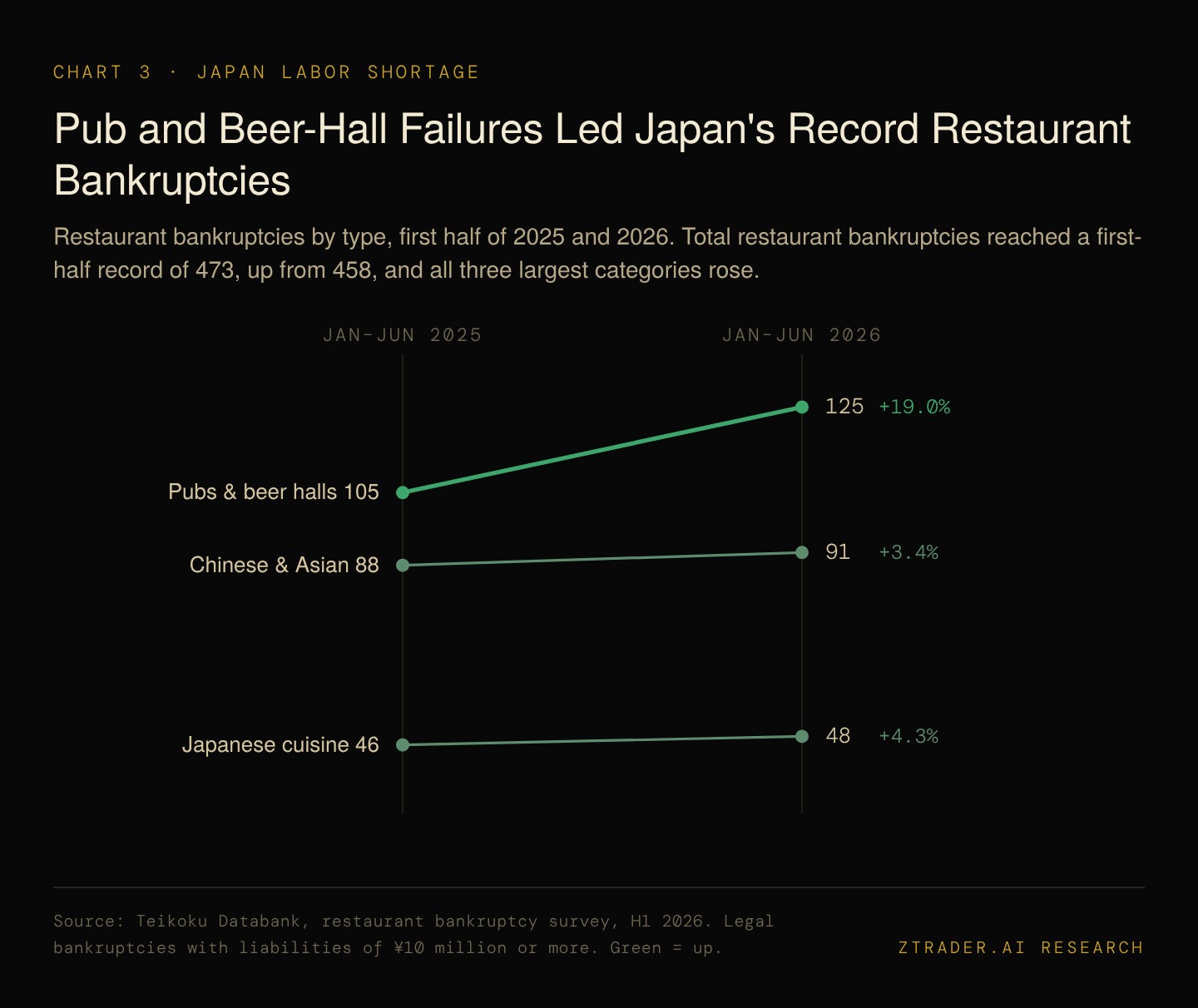
[CHART 3 — Restaurant Bankruptcies by Type, H1 2025 vs H1 2026 (TDB)]
THE AI -HR Software Can’t Create Workers Out Of Thin Air
Restaurant owners are being promised that technology will save them. Tech vendors in Japan are heavily marketing AI shift-scheduling software to restaurants, stores, and nursing homes, claiming AI can build your entire weekly schedule in minutes.
The market for these AI tools is exploding and Tokyo is full of these AI tool ads.
Market research firm ITR says workforce management software hit ¥32.8 billion in fiscal 2022—four times what it was ten years ago—and expects it to keep growing at 14% a year through 2027, mostly as cloud subscriptions.
But here’s the sad truth: these tools can only rearrange the deck chairs on Titanic’s.
They move existing hours around better, cut down paperwork, and tell you earlier that you’re in trouble. What they can’t do is bring actual bodies into the building. If you need nine people for a shift and only have six, a fancy AI algorithm just hands you a neatly printed schedule with three empty spots. You still have to cut hours, close early, or go out of business.
Software can manage a short-term labor shortage, but it can’t create human workers.
V. IF THE PAY IS RISING, SO WHY ARE JAPANESE WORKERS POORER?
On paper, wage growth in Japan looks great over the last three years.
But that headline number hides the real reason small companies can’t hire: once you factor in inflation, workers are actually taking pay cuts. Compare the raises to the cost of living, and you realize that “wage growth” is a total myth.
Four straight years of shrinking paychecks According to the government’s monthly labor survey for businesses with five or more workers:
2022 to 2025: Real wages went down every single year—dropping by 1.0%, 2.5%, 0.3%, and 1.3%.
The math doesn’t add up: Between 2021 and 2025, nominal pay went up about 8.6%, but prices shot up 14.3%. That means real wages ended up around 5% lower.
2026 is just a band-aid: Sure, real wages bumped back into positive territory month-by-month this year—up 1.5% in August—but that’s mostly thanks to temporary government energy checks and subsidies. It nowhere near covers the massive hole dug since 2021.
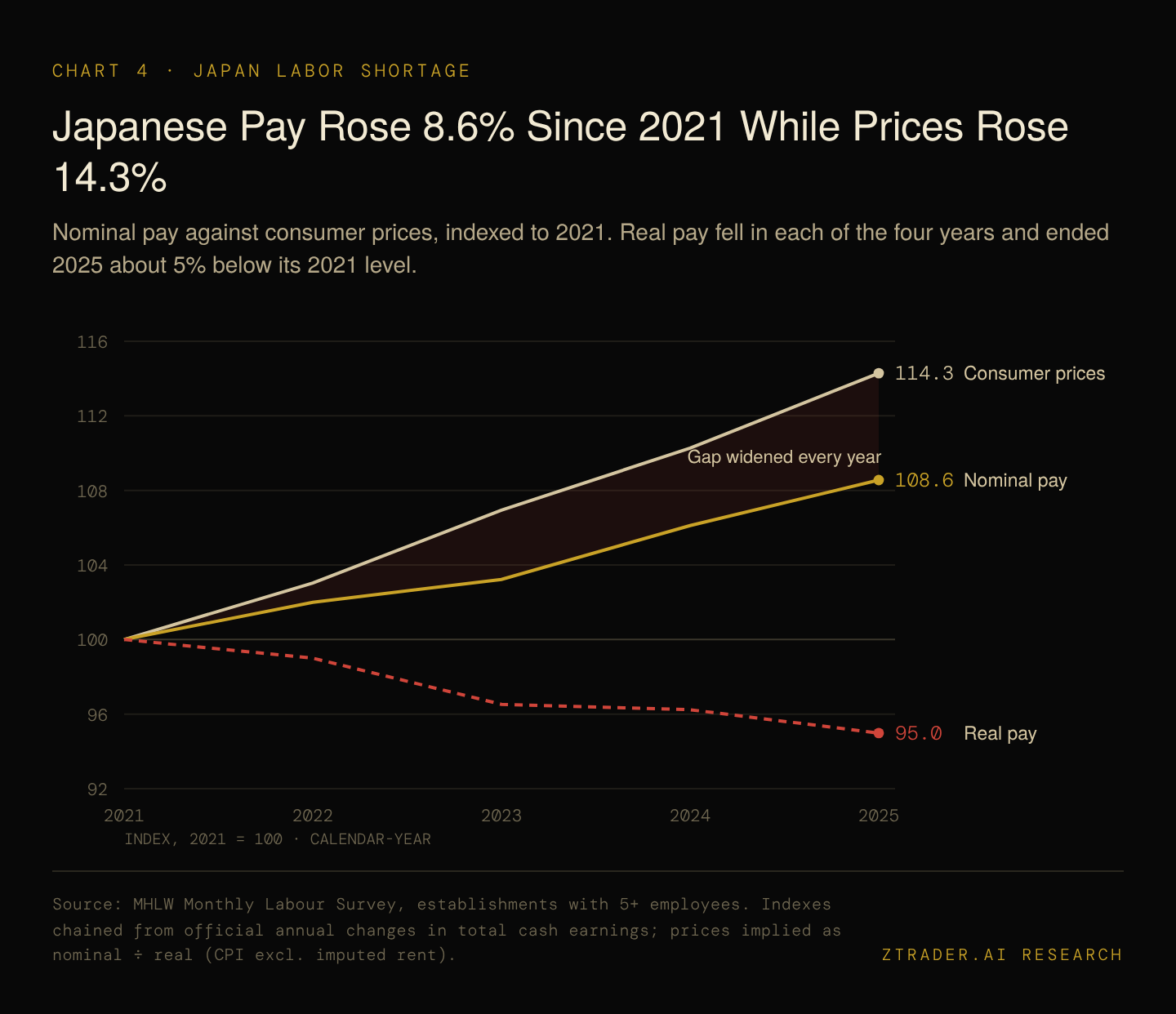
[CHART 4 — Nominal Pay vs Consumer Prices, 2021 = 100 (MHLW Monthly Labour Survey)]
Token Raises at Small and Mid-Sized Businesses
Looking at average wage numbers masks who is actually hurting. In the health ministry’s 2025 wage census, monthly pay grew 5.7% at big companies, but only 2.1% at small businesses and just 1.0% at mid-sized ones.
With inflation running at about 3.6% in 2025, big-company employees were the only ones who came out ahead. Workers at mid-sized firms took a real pay cut of around 2.6%, and small-firm employees lost about 1.5% in real purchasing power.
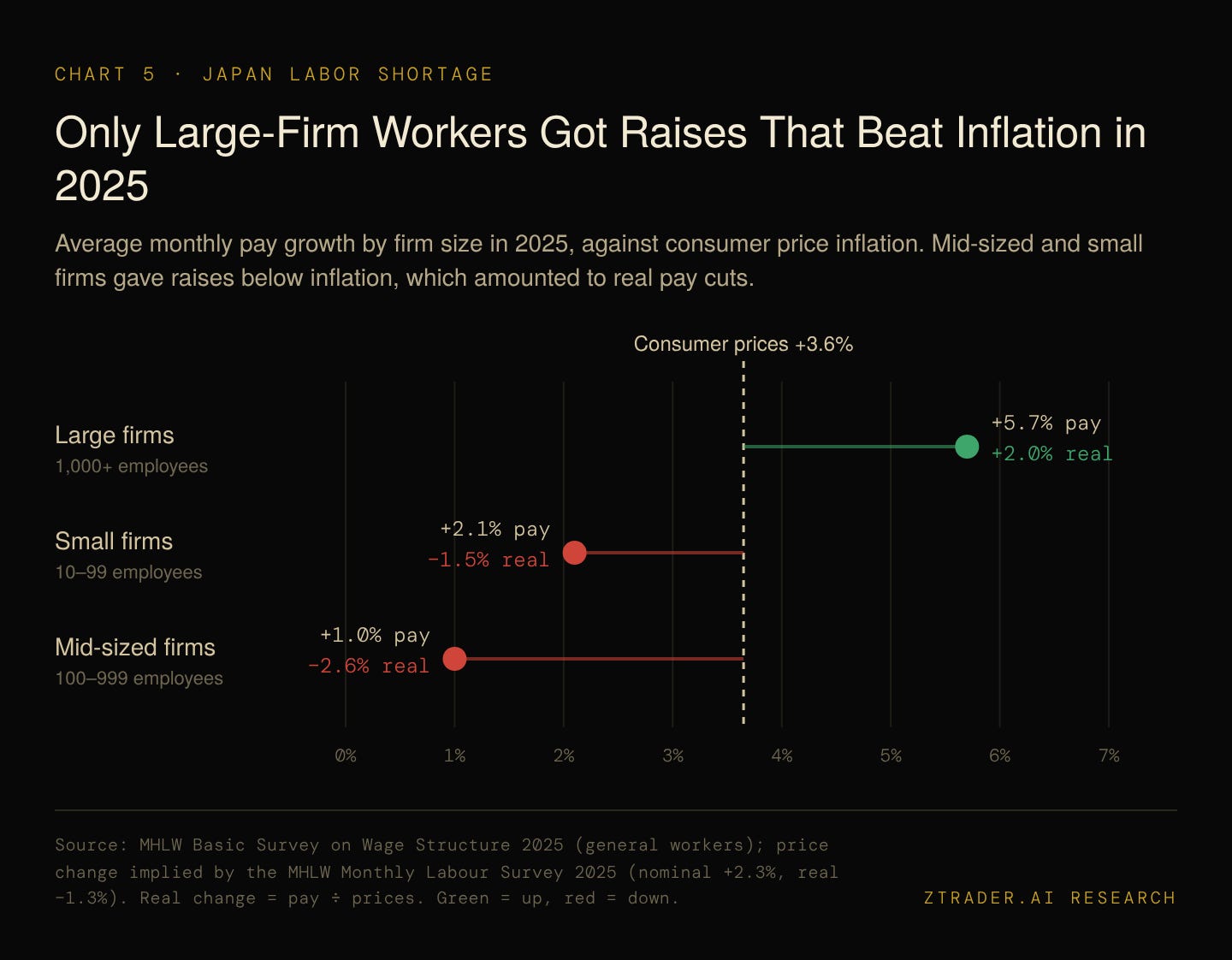
[CHART 5 — 2025 Pay Growth by Firm Size vs Consumer Prices (MHLW)]
This is where wage stagnation and the labor shortage meet. Small firms cannot offer pay that keeps up with prices, so they lose staff to large firms and struggle to hire replacements. The ones that do raise pay enough to compete run out of cash, which is why rising labor costs now cause 130 of TSR’s 240 labor-shortage bankruptcies.
Japan’s wage gains are concentrated in a few large employers outbidding everyone else for a shrinking pool of workers.
VI. JAPAN LETS IN WORKERS WHILE PUSHING OUT BUSINESS OWNERS
Foreign labor has been Japan’s main outside source of new workers, and it has grown fast enough to matter at the macro level. The policy tightening of the past year is now changing which foreigners come and which ones leave.
Scale: Japan had 2,571,037 foreign workers at the end of October 2025, up 11.7% and a record for the 13th consecutive year.
Share: That is roughly 3.8% of Japan’s workforce, and nearly triple the 900,000 recorded in 2015.
Contribution: The 268,450 foreign workers added in the year to October 2025 equal more than half of the 470,000 rise in total employment in 2025.
What the Headline Count Measures
Japan’s count of foreign residents, which reached a record 4,281,026 at the end of June 2026, covers mid- to long-term residents and special permanent residents only. Tourists and other short-term visitors are excluded, so the record reflects people living and working in Japan. The total, however, hides a split by visa type.
Business Owners Are Leaving
From October 16, 2025, the Business Manager visa, held by foreigners who set up and run companies in Japan, raised its capital requirement from ¥5 million to ¥30 million and added a requirement to employ at least one full-time Japanese or permanent-resident worker.
Holders: The number of Business Manager residents fell 8.6% in six months, from 46,781 at the end of 2025 to 42,747 at the end of June 2026, the only major work-related status to decline.
Departures: 953 Business Manager holders left Japan without a re-entry permit in the first half of 2026, 3.9 times the 246 who did so a year earlier.
Everyone else: Over the same six months, Specified Skilled Workers rose 13.8%, engineers and specialists 8.5% and highly skilled professionals 4.6%.
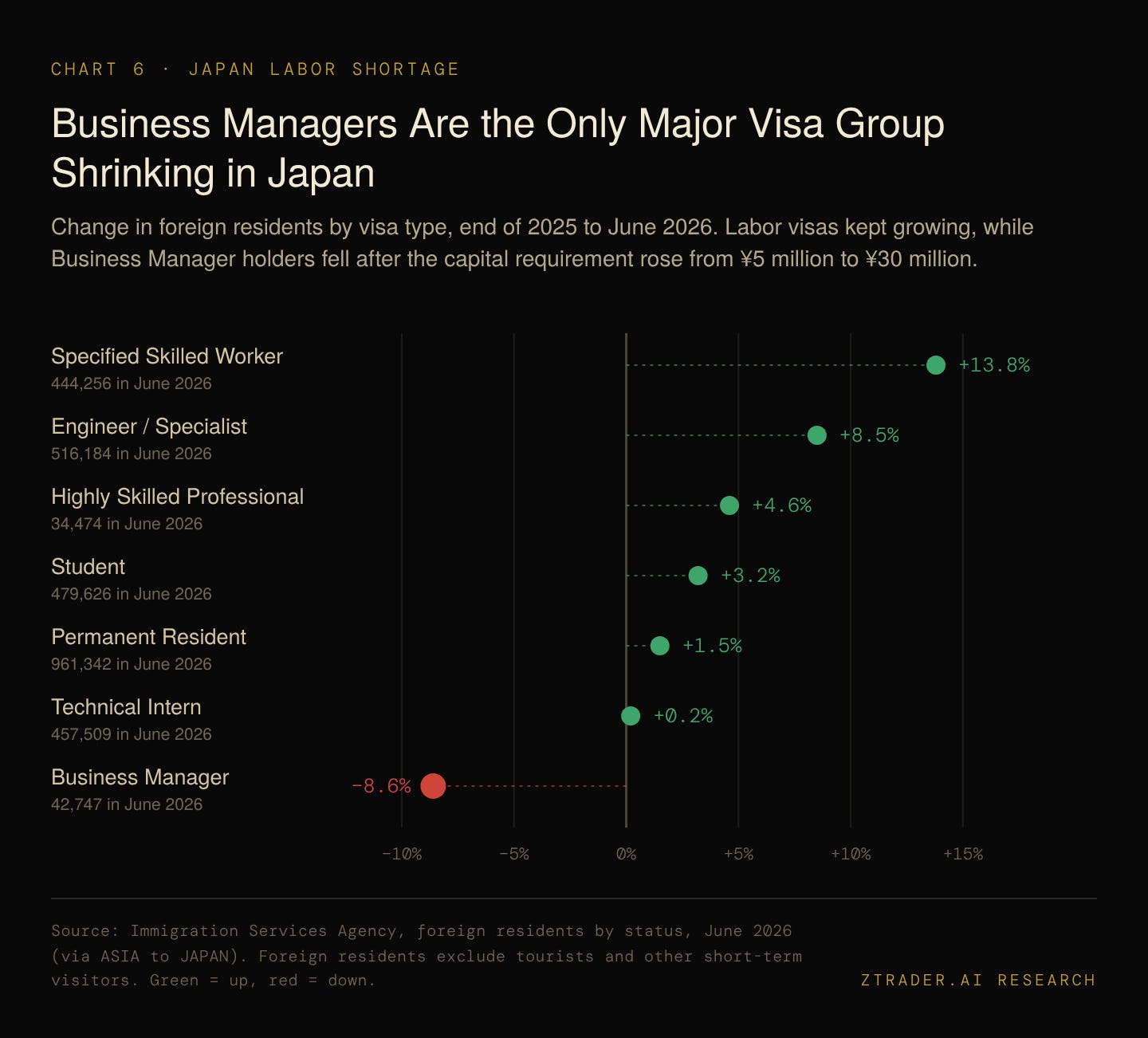
[CHART 6 — Change in Foreign Residents by Visa Type, End-2025 to June 2026 (Immigration Services Agency)]
The foreigners Japan is losing are the ones who bring capital and create jobs, while the foreigners still arriving fill existing jobs at the lower end of the wage scale.
The Labor Channel Is Narrowing Too
Foreign worker growth slowed from 12.4% the year before, and three forces are now narrowing this channel at the same time.
1. The weak yen: By mid-June 2026, Vietnam had sent nearly 28,500 workers to Japan and about 28,200 to Taiwan, according to figures reported by Dan Tri. Japan still ranks first, but Vietnamese officials say the yen’s depreciation has reduced its appeal.
2. Public opinion: In the University of Tokyo Institute of Social Science panel survey, the share of respondents opposed to admitting more foreigners who intend to settle in Japan rose to 56.3% in 2026 from 35.6% in 2024.
3. Policy: The government is moving to add Japanese-language and income requirements for permanent residency, and new Specified Skilled Worker admissions for food service were suspended from April 13, 2026 after the sector approached its 50,000 cap.