

By Dorian
Fear has a price.
On Wall Street, that price is the VIX. In a calm market, uncertainty lives in the future. This week, the curve flipped—and panic moved to the front of the line.
The Cboe Volatility Index closed at 19.30 on Friday, November 13.
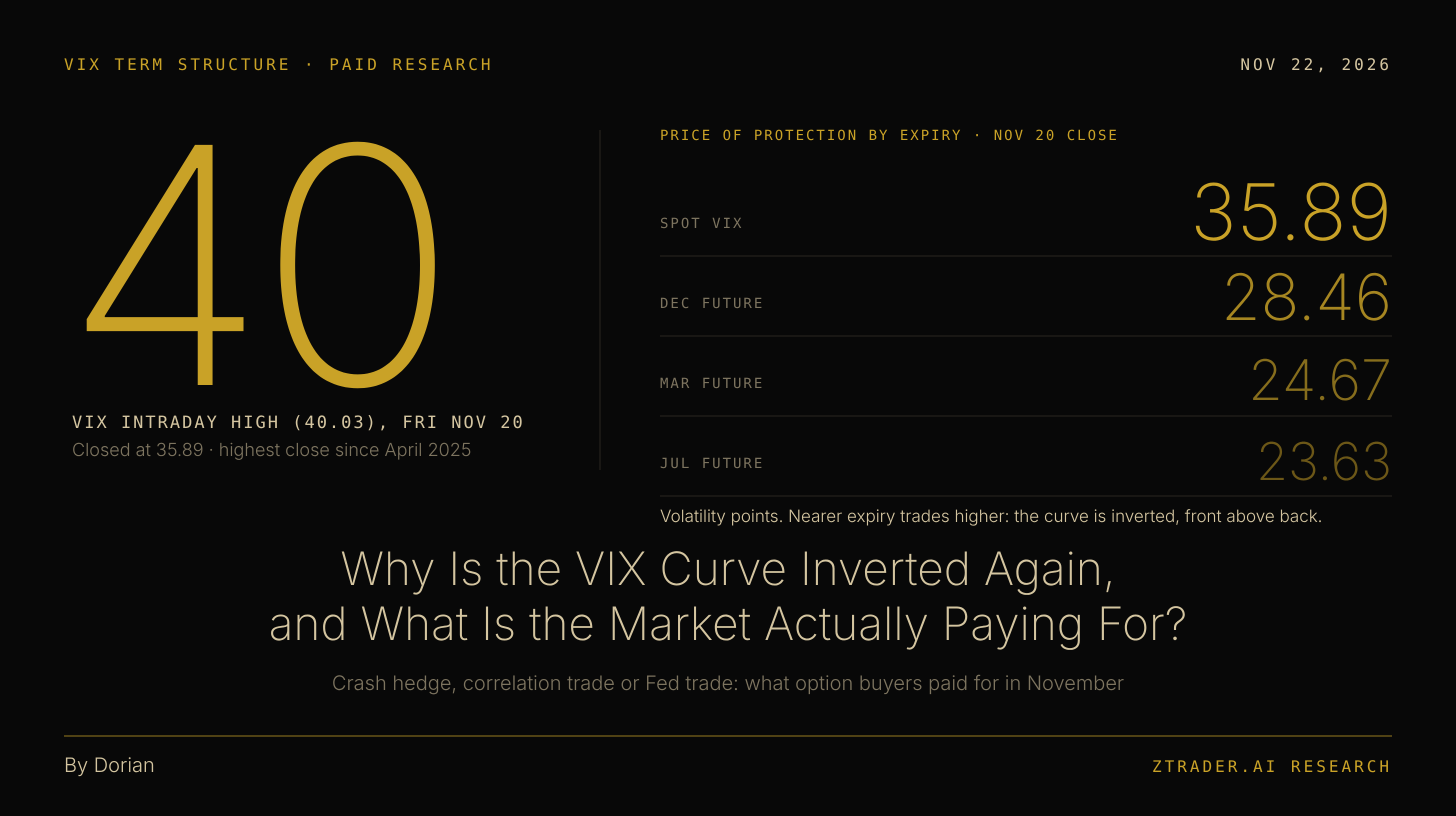
After five trading sessions later, on Friday, November 20, VIX index has touched 40.03 intraday and closed at 35.89, up 26% on the day and its highest close since the April 2025 tariff shock.
The S&P 500 fell 3.70% on Friday to 6,910.39, posted its seventh straight loss, and closed the week down 8.61%. The S&P 500 and the Dow both confirmed corrections, and the Nasdaq Composite erased its 2026 gain.
Most traders will read that headline number and stop there.
The headline number is the least useful part of the story. The VIX has now spiked twice in November, and the two spikes were built from different parts. The first spike came from put skew inside a market that was rotating.
The second spike came from stocks falling together, while the Fed priced another hike and the futures curve inverted from the front month to the back.
If you trade options, sell premium, or hedge a long book, the difference decides whether this week’s protection was expensive insurance or cheap insurance, and whether the inversion will unwind in days or in weeks.
I. HOW TO READ THIS WEEK’S VIX FUTURES CURVE
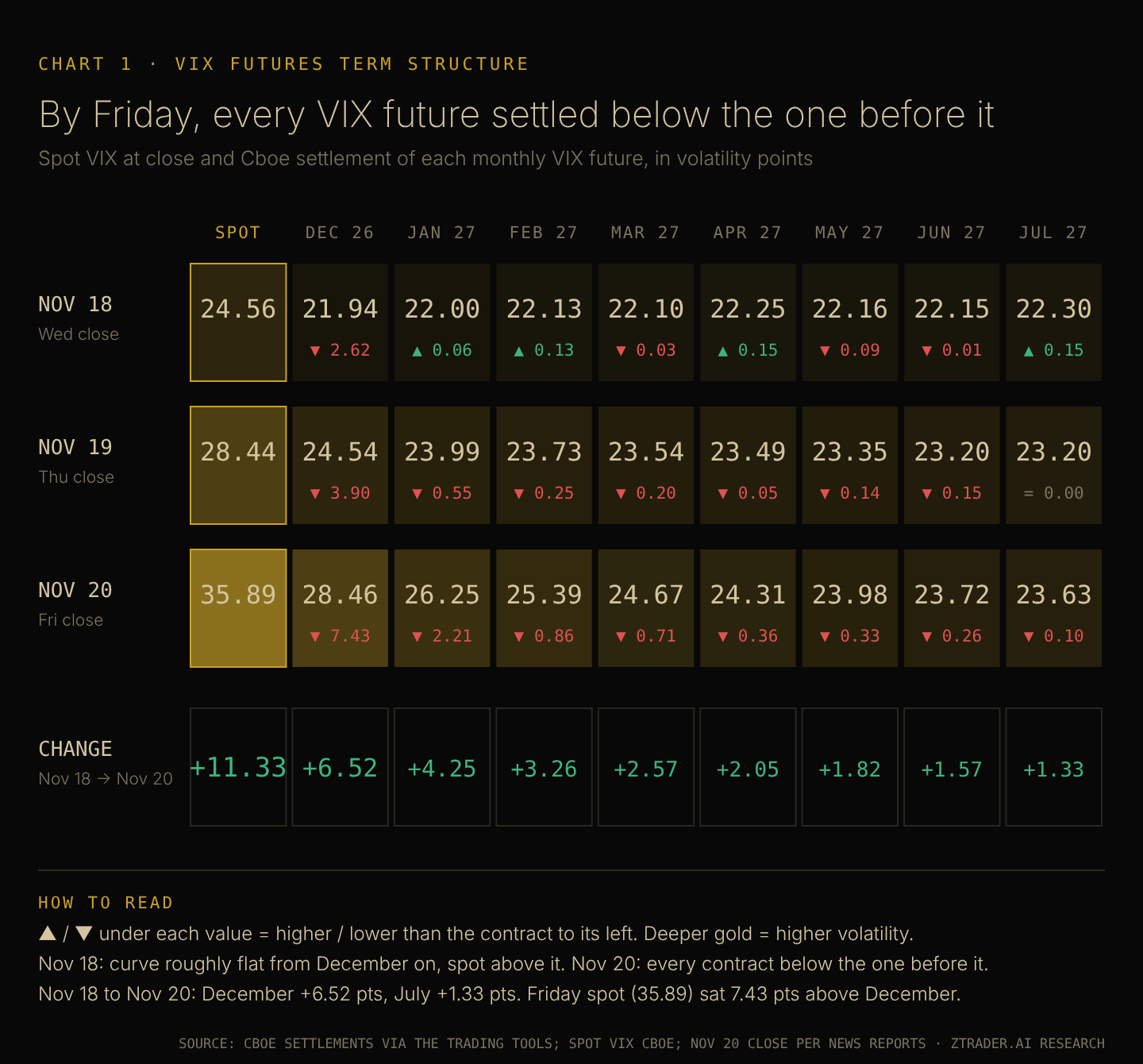
[CHART 1 — VIX Futures Curve: Nov 18, Nov 19 and Nov 20 Settlements]
The chart above plots each monthly VIX futures contract by its expiry date, from December 2026 out to July 2027, at the Cboe settlements of November 18, 19 and 20, next to spot VIX at each close. Before reading the grid, you need three definitions.
What Is a VIX Future?
VIX futures are cash-settled contracts on the Cboe Futures Exchange. Each contract settles on a Wednesday to a special opening print of the VIX, which measures the 30-day volatility implied by S&P 500 options on that morning.
In plain English, the December future is a bet on what the VIX will read on December 16, not on what it reads today.
Contango and Backwardation
Contango means later-dated futures trade above earlier-dated futures, so the curve will further slopes up. Backwardation means the front of the curve trades above the back, so the curve slopes down. According to Cboe, the VIX futures curve has been in contango more than 80% of the time since 2010. Contango is the normal state because volatility spikes tend to fade, and sellers of protection demand a premium for holding risk over longer horizons.
The Roll Yield and Basis
Basis is the gap between spot VIX and a futures contract. Roll yield is what a futures position earns or loses as that gap closes into expiry. In contango, a long VIX futures position bleeds as the contract drifts down toward a lower spot. In backwardation, the drift runs the other way, and the long position collects carry while the short position pays it.
Reading the VIX Curve
One week earlier, on November 12, the curve sat in normal contango. Saxo’s options brief that morning showed the front-month November future at 18.80, above spot VIX at 17.49, after an AI-led rally had cheapened protection across the curve.
On November 19, the same curve stood upside down. Cboe settlement data compiled by The Trading Tools shows December settling at 24.54, January at 23.99, March at 23.54, and both June and July at 23.20.
On Friday, November 20, the inversion deepened: December settled at 28.46, January at 26.25, March at 24.67 and July at 23.63, and every contract settled below the one before it. December rose 3.92 points that session, while July rose only 0.43 points, and the January contract settled 7.77% below December.
The steepness carries the message.
Across the two sessions, December gained 6.52 points while July gained 1.33 points, so the front moved almost five times as far as the back. Spot VIX closed Thursday at 28.44, about 3.9 points above the December future, and closed Friday at 35.89, about 7.4 points above it.
Friday’s settlement shows traders paying the most for protection that expires soonest, and they still expect the stress to fade by spring.
