

The 100$ OIL PRICE has pushed U.S. and Japanese bond yields to multi-decade highs in this week, the Fed and the BOJ may both hike into it, together.
Two totally different bond markets are deeply tied to one risk: INFLATION.
The U.S 10yr yield hit 5% — this is a level it hasn’t traded at since July 2007, in the meanwhile, JGB 10yr yield hits 3.00% , this number hasn’t traded since 1996,
OIL DOESN’T CARE ABOUT DUAL MANDATE
Oil PRICE is the only macro variable that matters right now
So what really drives the oil price?
U.S.–Iran conflict is now the key driver pushing up the oil price.
Much like Ukraine, this has become just another endless war.
Seven months in, it has built a permanent floor under energy prices—one that central bank tightening is completely powerless to suppress.
Crude price has surged from around $80 a barrel in early August toward $100-plus as Saudi Arabia’s East–West pipeline — the route that bypasses the Strait of Hormuz entirely — sits shut.
U.S. headline CPI stuck at 3.4% in August, Japanese producer prices up 7.6% year-on-year the same month.
Every central banker learns in school that policy rates can’t cure supply-driven inflation.
They raise rates regardless, because letting inflation expectations spiral while war dominates the news cycle is the worse fate.
Therefore that leaves both the Fed and the Bank of Japan sweating it out this week—split by an ocean, sharing the exact same pain.
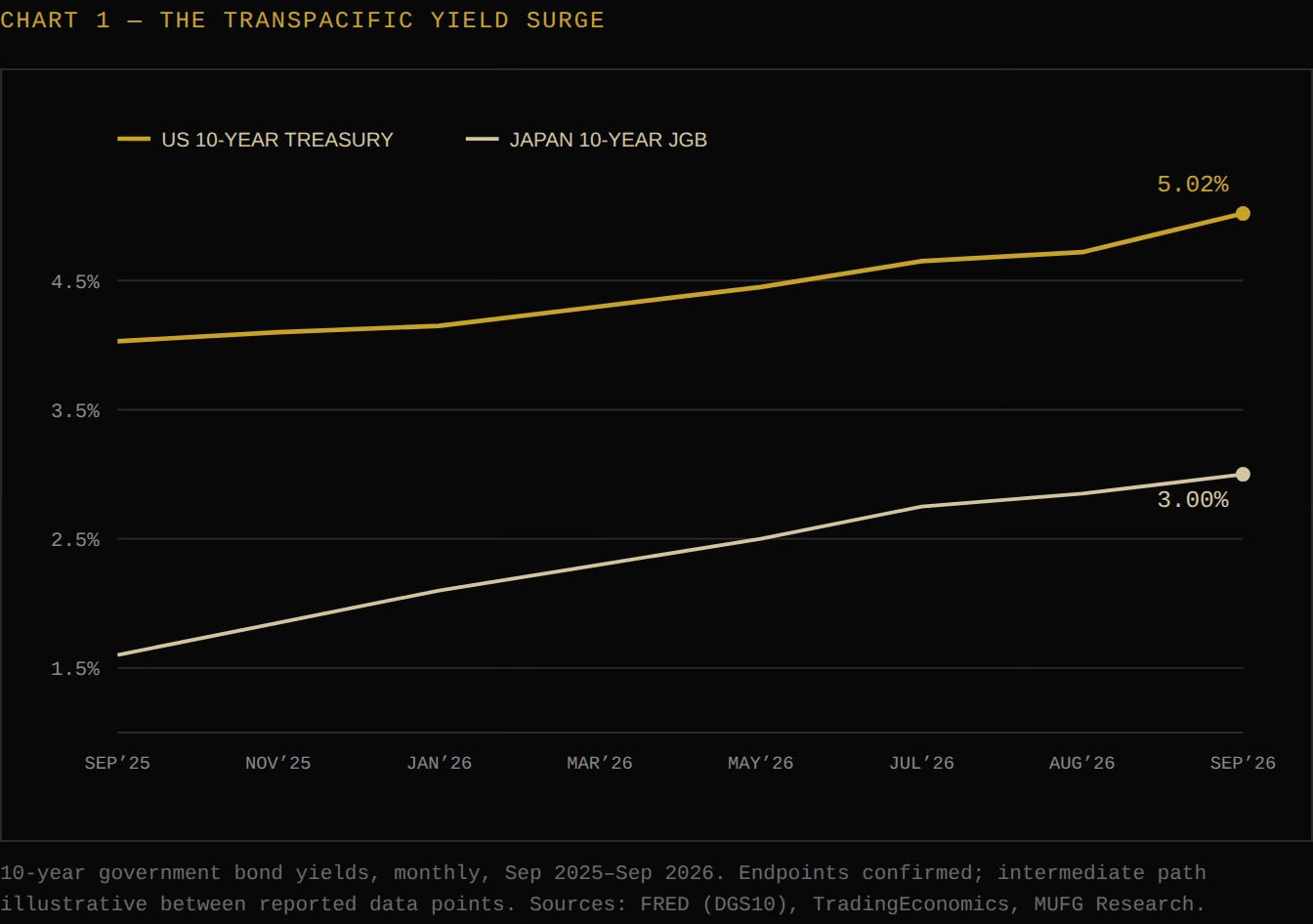
[CHART 1 — The Transpacific Yield Surge]
THE COMING RATE HIKE
Fed hasn’t raised rates since July 2023.
Six cuts followed through 2025.
All of 2026 was supposed to be a holding pattern while energy prices normalized. Then they didn’t.
At the July 29 meeting the committee held at 3.50%–3.75%, but three regional FED presidents — Hammack, Kashkari, Logan — dissented for a hike and this is rare.
Chair Kevin Warsh’s Jackson Hole speech at the end of August, where he leaned on 12-month PCE running near 3.7% and declined to offer forward guidance, is what moved the odds from a coin flip to roughly 88–90% for a quarter-point hike today.
The weak U.S. Treasury buyback announcement earlier this month added its own pressure at the long end curve.
THE LAST TIME THIS FED RAISED RATES, IT WAS FIGHTING PANDEMIC-ERA INFLATION.
THIS TIME IT’S FIGHTING A WAR IT DIDN’T DECLARE, WITH A CHAIR WHO WON’T EVEN GIVE YOU A DOT PLOT NARRATIVE TO HIDE BEHIND.
If the hike lands as the market has predicted, the target range for rate moves to 3.75%–4.00% — the first increase in three years, ending what had been a one-way street downward since 2023.
TOKYO IS ENDING ITS THIRTY-YEAR EXCUSE
We haven’t seen a 3% yield since 1996—right on the eve of Japan’s descent into its “lost decades.”
Japan’s story is less about a single speech and more about a slow-motion regime change finally completing.
The 10-year JGB yield crossed 3% for the first time since 1996 on September 1 and has held near there since, dragged up by U.S. yields, by Takaichi-era fiscal expansion pushing term premium higher, and by producer inflation that keeps giving the BOJ cover to keep going.
The 30-year JGB has been trading near its own record — last set earlier this year — for weeks, and demand at recent super-long auctions has been soft enough to worry the Ministry of Finance about how much more of this the market can absorb without a supply cut.
The Bank of Japan meets September 17–18 and is widely expected to raise its policy rate to 1.25%, the highest since April 1995.
Japan built thirty years of monetary and fiscal architecture around the assumption that this specific combination — hiking rates, rising term premium, a currency under pressure, foreign officials publicly lobbying for tighter policy — would never all show up in the same quarter.
THEY ARE now showing up in the same quarter.
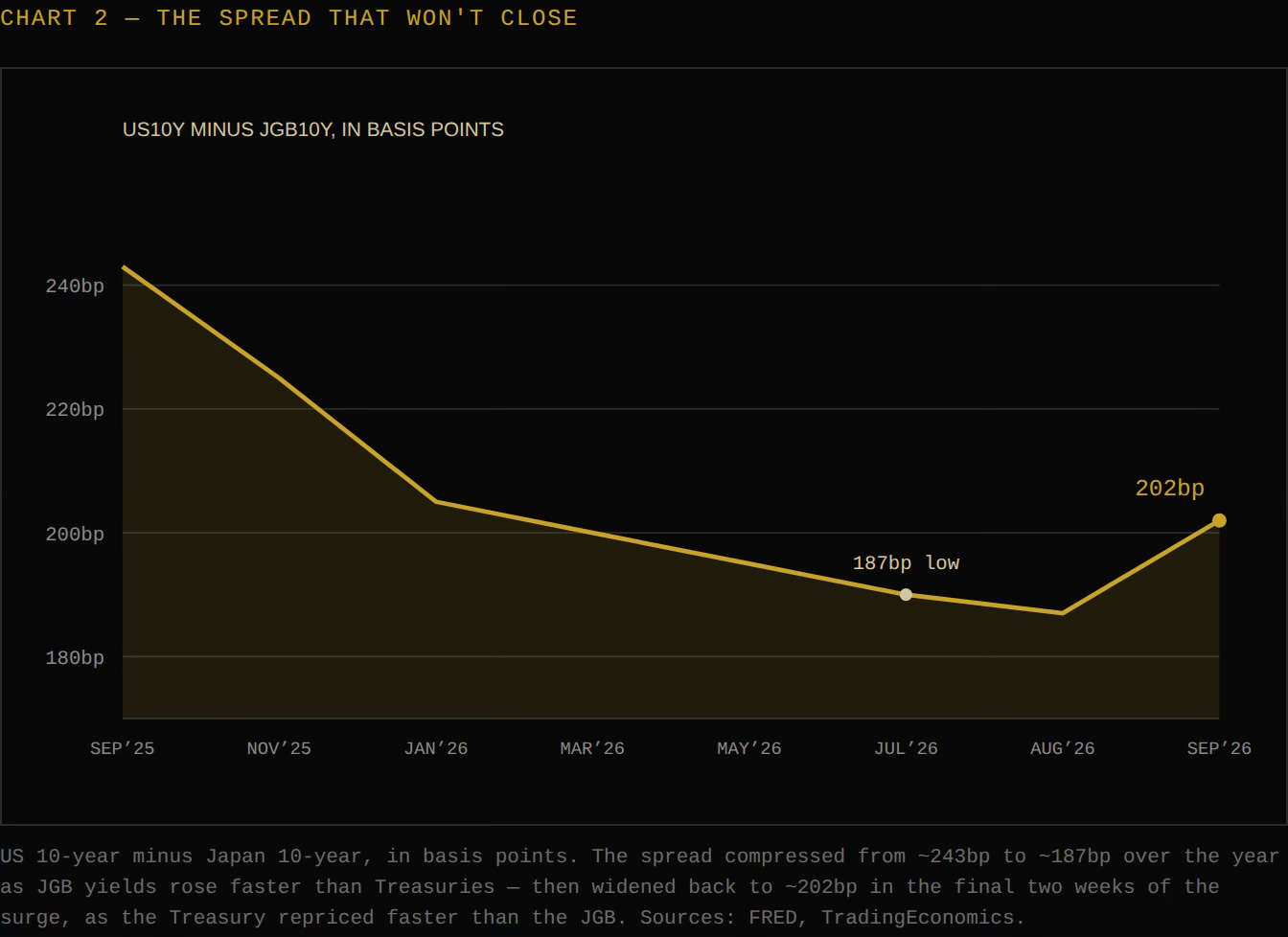
[CHART 2 — The Spread That Won’t Close]
THE YEN BUYBACK
USD/JPY crashed through 164 in late July—hitting a four-decade low for the yen—and forced a rare joint intervention.
Washington and Tokyo stepped in together on July 31, with Japan burning a record ¥15.4 trillion ($96.5 billion) between July 30 and August 26.
The currency clawed back to the low 150s by September, only to slide back to 160.4 after a botched Treasury buyback widened the rate gap right back in the dollar’s favor.
It has since hovered near 155.4 ever since.
U.S. Treasury Secretary Scott Bessent isn’t even trying to hide his playbook: he’s openly demanding the BOJ prop up the yen, leaning on Tokyo to clean up its fiscal house and hike rates.
Let us think about that for a second: when a foreign treasury secretary is publicly micromanaging another sovereign nation’s central bank live on CNBC.
The yen intervention just bought them some breathing room.
However, intervention won’t fix the structural rate gap that broke the system in the first place.
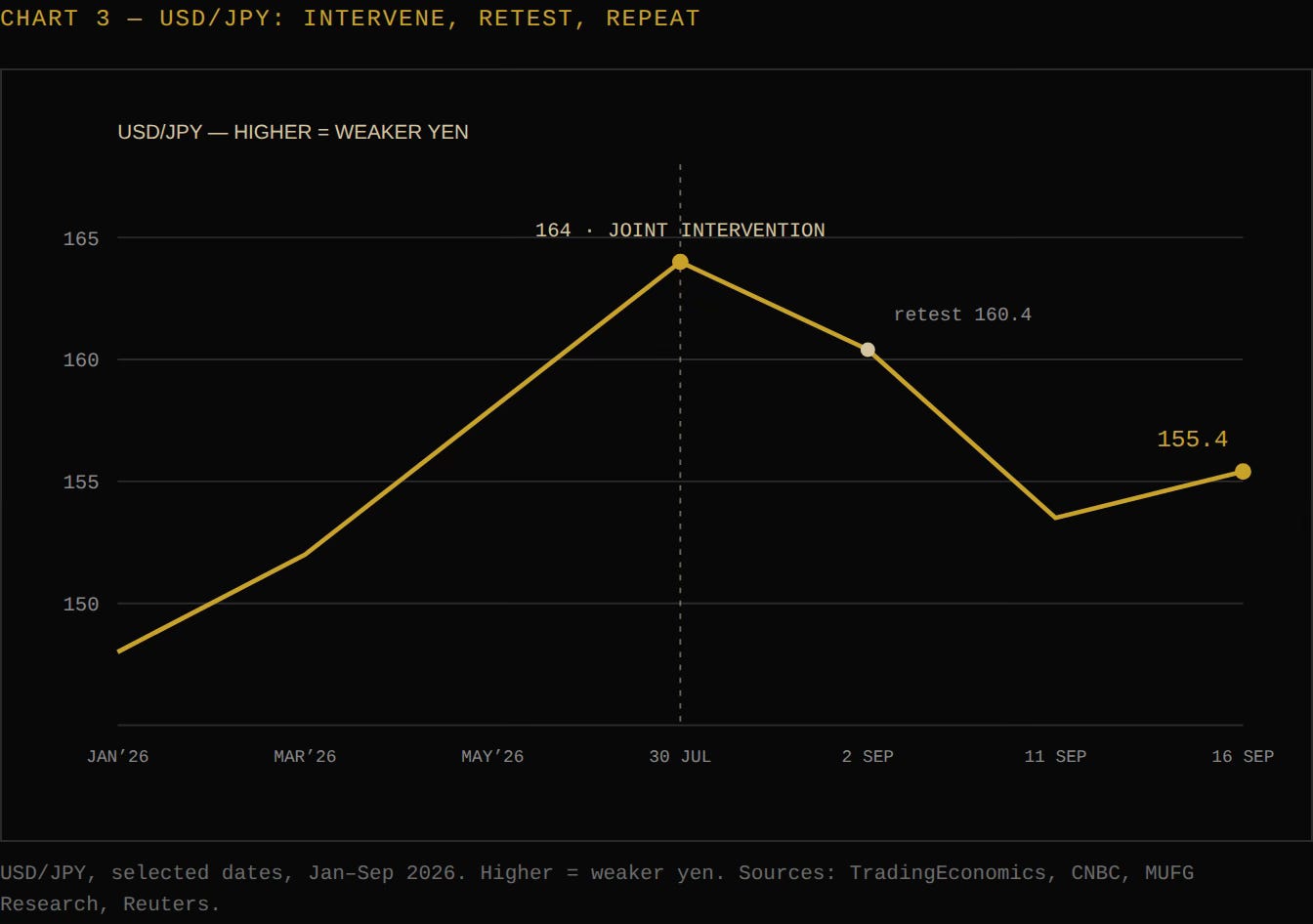
[CHART 3 — USD/JPY: Intervene, Retest, Repeat]
THE RATE MATRIX
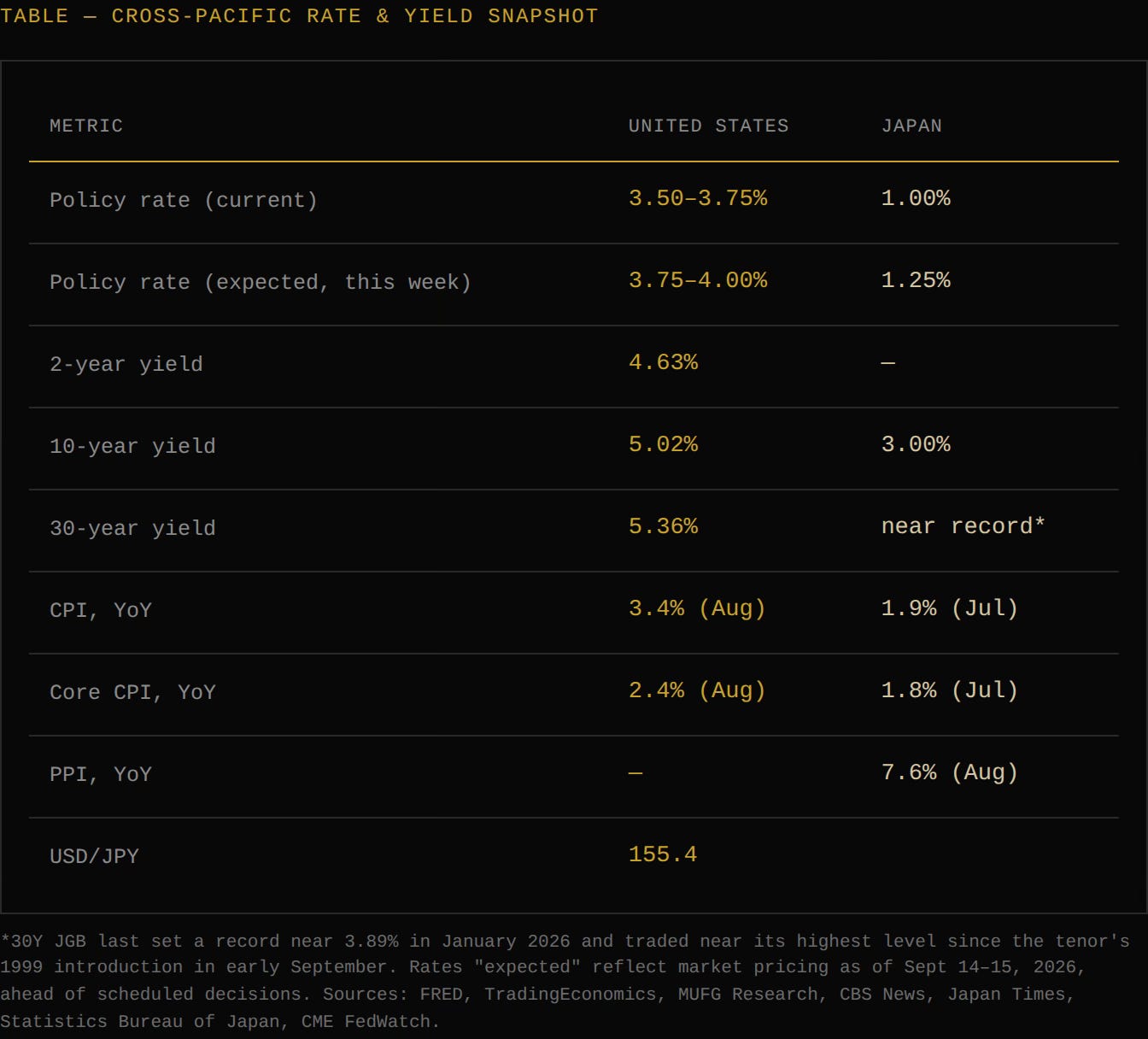
Read the table one way and the story is convergence:
Both central banks are tightening, both currencies’ bond markets are under the same pressure:
a 375bp policy-rate gap that a single BOJ hike barely dents, and a 10-year spread that, as Chart 2 shows, just widened again instead of closing.
Two central banks are now deeply tied up together.
And they are exposed to the very same risk: INFLATION.
The FOMC decision lands this afternoon, the BOJ follows in about forty-eight hours, and neither result actually settles anything — the oil price does that, and nobody at the Eccles Building or on Hongokucho-dori gets a vote on the Strait of Hormuz.